
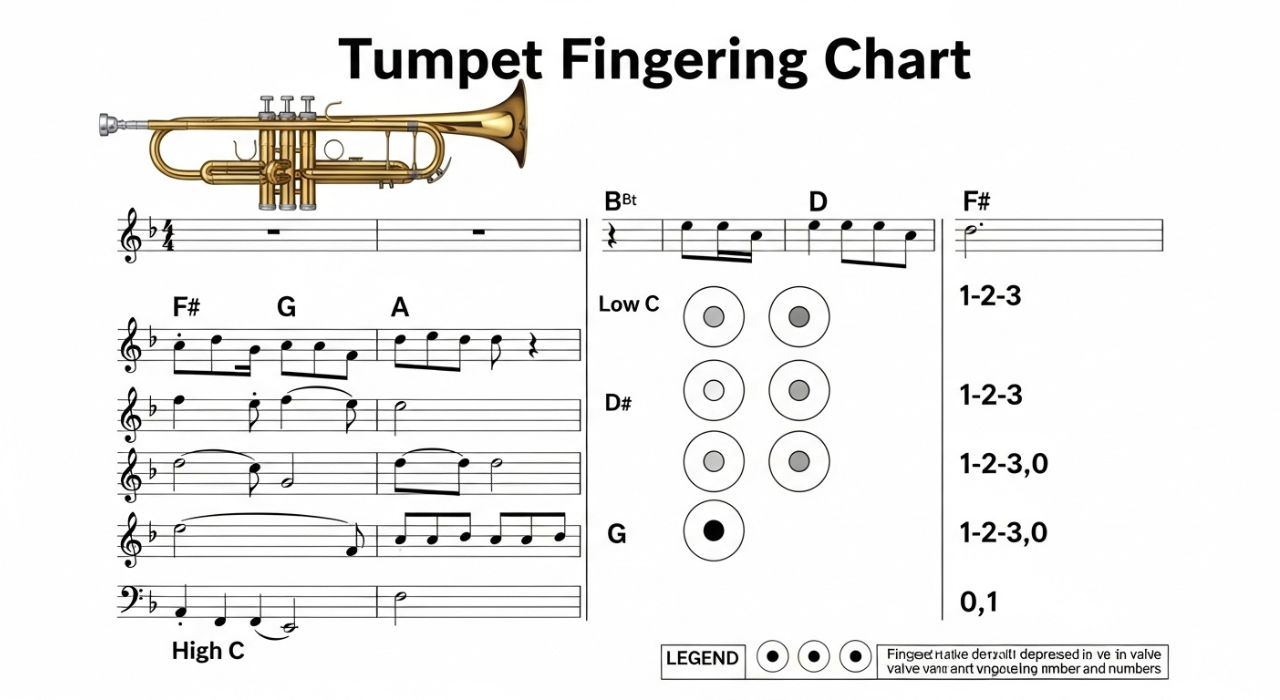
The trumpet, with its bright and bold sound, is a staple in various music genres. Yet, for many aspiring musicians, it can feel daunting to master this instrument. One of the most valuable tools in your musical toolkit is the trumpet fingering chart. This handy guide unlocks a world of notes and melodies just waiting to be played.
Imagine having an easy reference that demystifies the complexities of finger placements for each note. Whether you’re starting fresh or brushing up on skills, understanding how to read and use a trumpet fingering chart can accelerate your learning process significantly. It’s not just about knowing where to place your fingers; it’s about building confidence in your playing ability.
Ready to dive deeper? Let’s explore what makes the trumpet fingering chart such an essential companion on your musical journey!
Understanding the Basic Layout and Terminologies
The trumpet fingering chart serves as a visual guide for musicians. It presents the various notes and their corresponding finger placements on the instrument. Each note is represented by a specific combination of valves pressed.
At first glance, it might seem overwhelming. However, familiarizing yourself with the layout can significantly enhance your playing experience. The chart typically displays notes in ascending order, making it easier to understand their relationships.
You’ll notice terms like “valves” and “notes.” The three valves control airflow and dictate which pitch you produce. For instance, pressing valve one lowers the pitch while combinations yield different sounds.
Recognizing symbols such as whole notes or half notes is also vital. These indicate how long each note should be held during play. By grasping these basic terminologies and layouts, you forge a stronger connection with your trumpet journey.
The Importance of Memorizing the Fingering Chart
Memorizing the trumpet fingering chart is a game-changer for any trumpeter. It transforms how you approach playing music, allowing you to focus on expression rather than mechanics.
When fingerings become second nature, your brain can dedicate more energy to breathing and tone production. This seamless integration enhances your overall performance.
Additionally, familiarity with the chart boosts confidence during practice and performances. You won’t be stuck wondering which valve to press amid a challenging piece.
Beyond individual pieces, memorization contributes to sight-reading skills. Quick access to fingerings means faster note recognition and smoother transitions in your playing.
Mastering this essential tool opens doors for creativity and improvisation. The more comfortable you are with the trumpet fingering chart, the freer you’ll feel as an artist.
Tips and Tricks for Mastering the Fingering Chart
To master the trumpet fingering chart, start by practicing regularly. Consistency is key in building muscle memory.
Use flashcards to quiz yourself on different notes and their corresponding fingerings. This interactive method can enhance your recall speed during practice sessions.
Another effective technique is to play scales while focusing solely on your fingers. You’ll develop a better understanding of how each note connects with its fingering.
Try sight-reading new music alongside the chart. It challenges you to apply what you’ve learned in real-time, solidifying your knowledge further.
Additionally, consider grouping similar fingerings together when memorizing them. Patterns can make it easier to remember sequences and transitions between notes.
Don’t shy away from recording yourself playing. Listening back helps identify areas that need improvement while reinforcing correct finger placements over time.
Common Mistakes to Avoid While Using the Fingering Chart
Many musicians overlook the importance of proper finger placement. Relying too heavily on visual cues can lead to sloppy technique. Always ensure your fingers are positioned accurately over the valves.
Another mistake is not practicing regularly with the fingering chart. It’s easy to think you’ve mastered it, but consistent practice solidifies memory and enhances muscle memory.
Some players rush through learning notes without paying attention to rhythm or timing. Remember, a note played cleanly at the right moment holds more value than several notes hurriedly executed.
Additionally, neglecting transpositions can trap you in one key signature. Familiarize yourself with different keys using your fingering chart for versatility.
Don’t hesitate to mark personal notes directly on your chart if certain fingerings feel awkward or challenging. Personalization aids comprehension and retention of information while playing.
Advanced Techniques for Utilizing the Fingering Chart
Once you’re comfortable with the basics of the trumpet fingering chart, it’s time to explore advanced techniques that can elevate your playing. One effective method is to practice chromatic scales using the chart. This not only helps with finger coordination but also strengthens your overall familiarity with note transitions.
Incorporate a variety of exercises like arpeggios and interval training while referencing your fingering chart. This approach allows you to visualize connections between notes, reinforcing memory retention.
Another innovative technique involves teaching others using the chart. Explaining fingerings and note relationships requires deep understanding, benefiting both you and your students.
Experimenting with transposition can be invaluable too. Use the fingering chart for different keys—this expands your musical versatility and challenges your adaptability as a musician. Engaging in these practices will enhance not just technical skills but also artistic expression on the instrument.
Conclusion
The trumpet fingering chart is not just a tool; it’s your companion on the musical journey. Embracing it can unlock countless opportunities for growth and creativity. By understanding its layout, memorizing the fingerings, and avoiding common pitfalls, you’ll enhance your playing experience.
As you continue to explore the world of music, remember that this chart will always be there to guide you. It serves as a foundation upon which you can build advanced techniques and develop your unique style. So take some time with the trumpet fingering chart—let it inspire you—and watch how it transforms your practice sessions into something truly special. Your journey with the trumpet awaits!
