
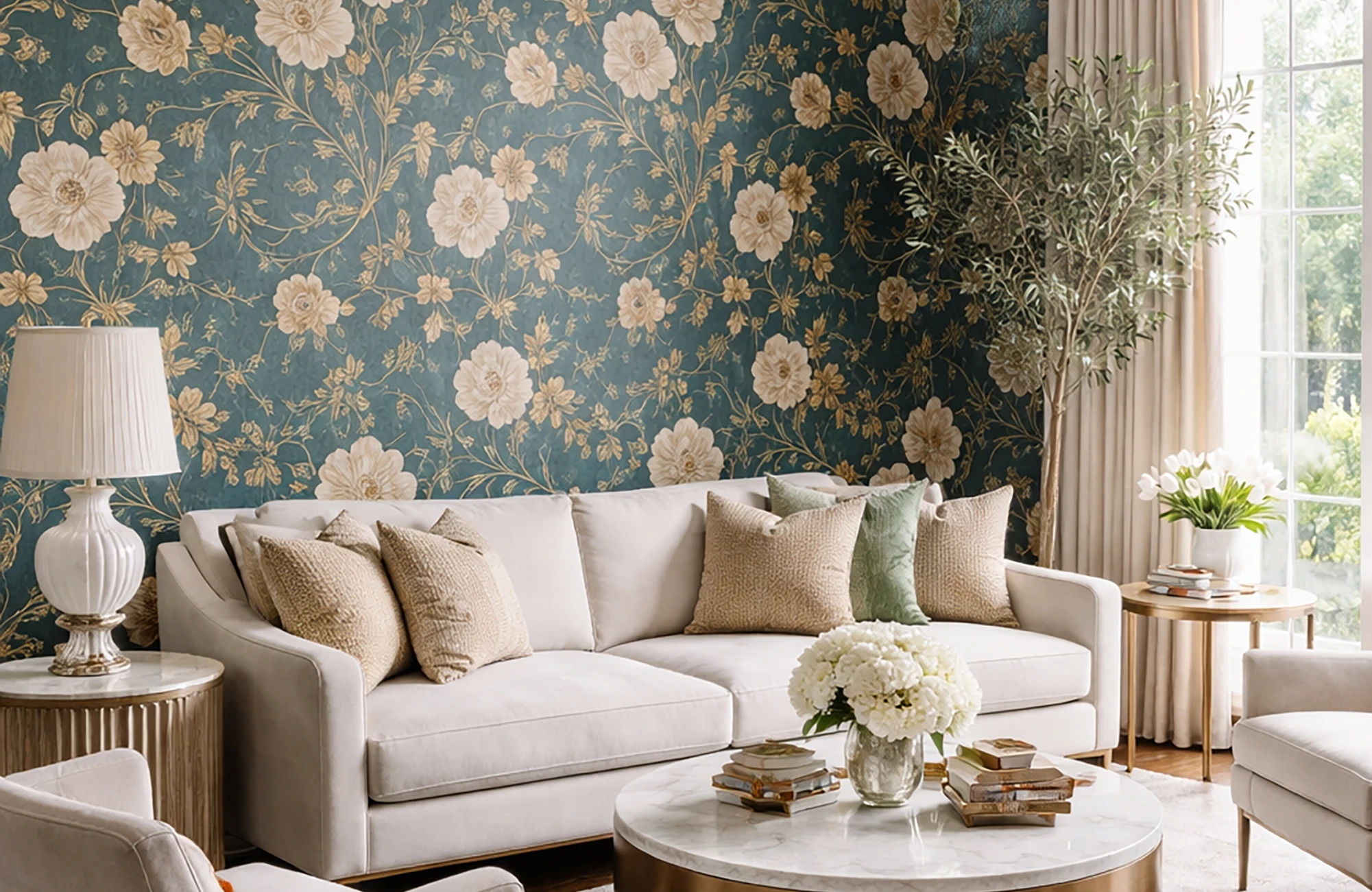
Wallpaper is often selected for its visual impact: texture, color, rhythm, and atmosphere. But once it leaves the showroom and enters a real home, it stops being “just décor” and starts behaving like a technical finish. It reacts to wall movement, moisture, temperature changes, surface chemistry, and even how the home is ventilated and lived in.
This is why the same wallpaper can perform beautifully in one house and fail quickly in another. The difference is rarely the material alone. It’s the preparation, planning, and execution that most people never see — until problems appear.
This article explains why wallpaper failures are usually predictable, what’s commonly overlooked, and how professional-level planning changes outcomes.
Most wallpaper problems are not accidents
When wallpaper bubbles, lifts at seams, or separates at corners, it’s tempting to blame the product. In reality, most failures follow a small set of repeatable causes.
Wall surfaces that were “paint-ready,” not wallpaper-ready
Paint hides minor imperfections. Wallpaper exposes them. Dust, sanding residue, patch compounds, and uneven porosity interfere with adhesion long before the wallpaper is installed.
Uneven absorption across the wall
Repaired areas, old paint, and fresh drywall all absorb moisture differently. Without proper sealing, adhesive cures unevenly, leading to tension that shows up weeks or months later.
Environmental stress
Daily humidity changes, seasonal temperature swings, and air movement all affect wallcoverings. Some materials tolerate this well. Others require strict control and preparation.
Layout decisions made too late
Pattern drift, awkward seam placement, and visible inconsistencies are often the result of rushed layout planning, not poor craftsmanship.
These issues are not random. They are the result of skipping steps that experienced installers treat as non-negotiable.
“Smooth walls” are often not smooth enough
One of the most common misconceptions is that a wall that looks smooth is ready for wallpaper. In reality, wallpaper-ready walls require a much higher standard.
Problems that become visible after installation include:
- drywall joints that were never fully feathered
- patch edges that telegraph under directional light
- roller texture left from previous paint work
- sanding scratches that catch shadows
- buildup at inside and outside corners
Wallpaper amplifies these conditions rather than hiding them.
Professionals evaluate walls under angled light, assess visual planes across entire surfaces, and treat wall preparation as part of the finished product — not a preliminary chore.
The invisible system that determines success
Wallpaper performance depends on three layers most homeowners never think about: primer, wall sealer (or sizing), and adhesive.
Primer compatibility
Some primers work well for paint but fail under wallpaper. They may be too slick, too absorbent, or chemically incompatible with certain adhesives.
Sealing and sizing
Sizing creates a controlled surface that improves workability and protects drywall during future removal. Skipping this step often leads to damaged walls later.
Adhesive selection
Different materials require different adhesive behavior. Weight, backing type, open time, and resistance to humidity all matter. Using the wrong adhesive is one of the fastest ways to shorten the lifespan of a wallcovering.
These elements work together as a system. Treating them as interchangeable parts almost always leads to problems.
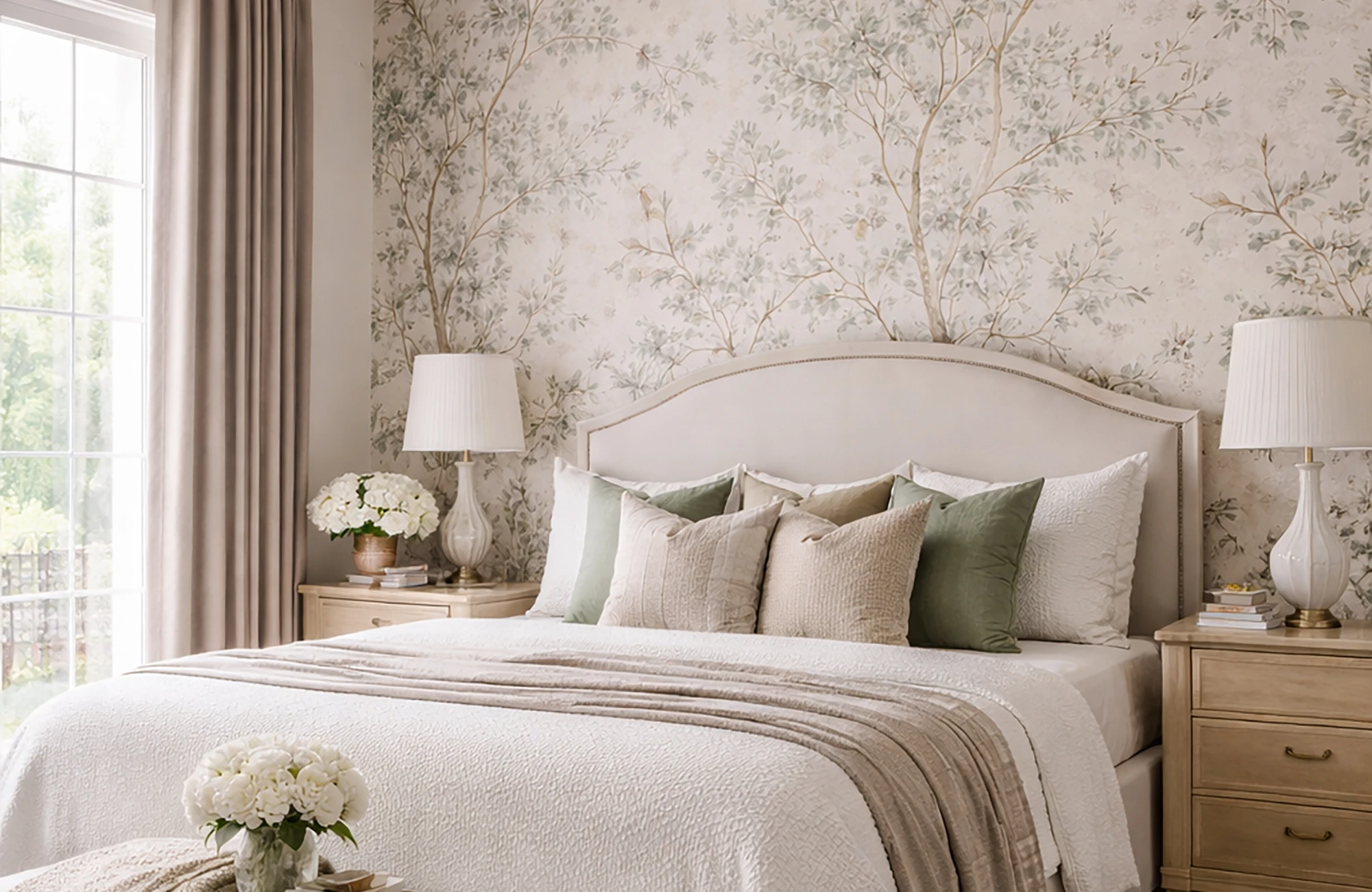
Material choice only works when execution matches it
Vinyl wallcoverings
Highly durable and cleanable, often used in high-traffic spaces. Performance depends on correct priming and careful seam treatment.
Non-woven wallcoverings
Dimensionally stable and popular in residential interiors. Still unforgiving of wall defects and poor preparation.
Natural materials (grasscloth, textiles)
Visually rich but inherently irregular. Seams, shading variation, and texture must be handled intentionally rather than “corrected.”
High-sheen and specialty finishes
Reveal every imperfection beneath them. These materials demand near-perfect substrate conditions and precise handling.
Choosing the right wallpaper without matching it to the wall condition and environment is one of the most common — and expensive — mistakes homeowners make.
Where professional installation changes everything
The difference between wallpaper that lasts and wallpaper that fails is rarely speed or tools. It’s judgment.
Experienced installers evaluate:
- wall condition and prep requirements
- lighting direction and pattern visibility
- humidity and seasonal movement
- seam placement and layout sequencing
- material-specific handling limits
Homeowners who want predictable, long-term results often benefit from working with teams that specialize in wallcovering installation services in the Denver metro area, where climate variation, construction methods, and complex residential interiors require a higher level of planning than a standard decorative install.
This kind of experience turns wallpaper from a visual risk into a controlled interior finish.
Planning material selection before problems appear
Many wallpaper issues begin before installation day — at the selection stage.
Choosing based solely on appearance can lead to mismatches between material behavior and the space it’s installed in. Reviewing durability, environmental sensitivity, wall preparation requirements, and long-term maintenance expectations with this Denver metro area contractor before ordering materials helps prevent costly rework and premature failure.
Early planning aligns design intent with real-world performance.
High-risk areas need different thinking
Bathrooms and laundry rooms
Wallpaper can work well when ventilation, material choice, and edge detailing are addressed properly.
Kitchens
Placement matters more than pattern. Heat, grease, and cleaning habits must be considered early.
Stairwells and tall walls
Long drops, pattern continuity, and access challenges require planning and staging, not improvisation.
These areas fail most often because they are treated like ordinary walls — when they are not.
Avoiding delays and rework
Wallpaper rarely delays projects because installation takes too long. Delays happen when preparation is underestimated.
To reduce risk:
- assume walls need more prep than expected
- order extra material for matching and waste
- stabilize indoor humidity before and after installation
- coordinate paint and trim work in advance
Good planning protects both the schedule and the final appearance.
Wallpaper works best when treated as a system
Wallpaper succeeds when it is treated as a finish system, not a decorative afterthought. The wall beneath it, the materials used, and the execution all determine how it performs over time.
When preparation, planning, and installation align, wallcoverings deliver the depth, character, and longevity they are known for — without the failures that give them an undeserved reputation.
